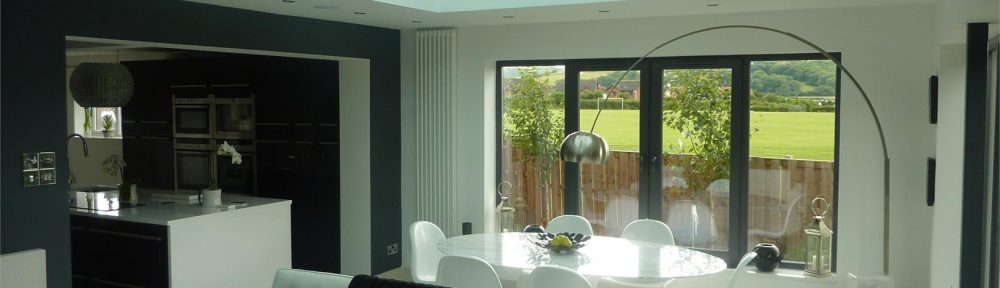
The addition of a conservatory to your home can add some much-needed space if you plan it carefully. In the olden days, conservatories were considered to be just for plants – now they are predominantly for humans, those seeking extra flexible space in their home. The flexible nature of conservatories is what makes them so popular in the first place; they can be used as a dining room, playroom or TV room – they can be constantly altered to suit your changing needs; it can be a very cost-effective way to extend a property. Conservatories Bangor can install a beautifully constructed conservatory in your home, that can be used 365 days a year.
Conservatory or Orangery?
An orangery is possibly best described as a hybrid between a conservatory and a traditional extension. It is more substantial than a conservatory as they have brick-built pillars, but on the other hand, conservatories tend to be made mostly of glass and have minimal brickwork. Orangeries are usually separated from the rest of the house by external-grade walls, windows or doors – although these aren’t always necessary. When it comes to the cost implications, orangeries tend to be more expensive than conservatories – this is due to the construction process being more complex.
The Value of a Conservatory
It can be a common misconception that a conservatory will automatically add value to your property – this depends quite significantly on the build quality. Before breaking ground on a new conservatory, it would be a good idea to speak to your local estate agent for a current home valuation as well as a rough estimate of your property’s potential value with the addition of a conservatory.
Planning Permission
This isn’t a necessity, the addition of a conservatory to a house is considered to be a permitted development – provided that it meets certain rules and regulations. For example, it is exempt from the rules if it’s no more than four metres in height, and lower than the highest part of the existing roof, and if it covers no more than half the area of land around the original house.
If your chosen conservatory design doesn’t conform to these rules, you are able to apply for planning permission yourself, but many companies will handle this for you as part of their overall service.
Which frame is best?
Conservatory frames traditionally come in a choice of uPVC, aluminium and timber. uPVC is more affordable and requires a lot less maintenance than timber, and a little bit of tender loving care goes a long way to keeping it looking in good condition for longer. Timber is the option to choose if you’re going for the more natural look, you could also ask your installer to source the wood from a sustainable source if you’re looking to reduce your environmental impact.
Aluminium frames need almost no maintenance whatsoever, they’re durable and offer slim sightlines. The high quality of aluminium as a building material means that you’re likely to add value to your home – whereas the use of uPVC alternatives could detract the value.